
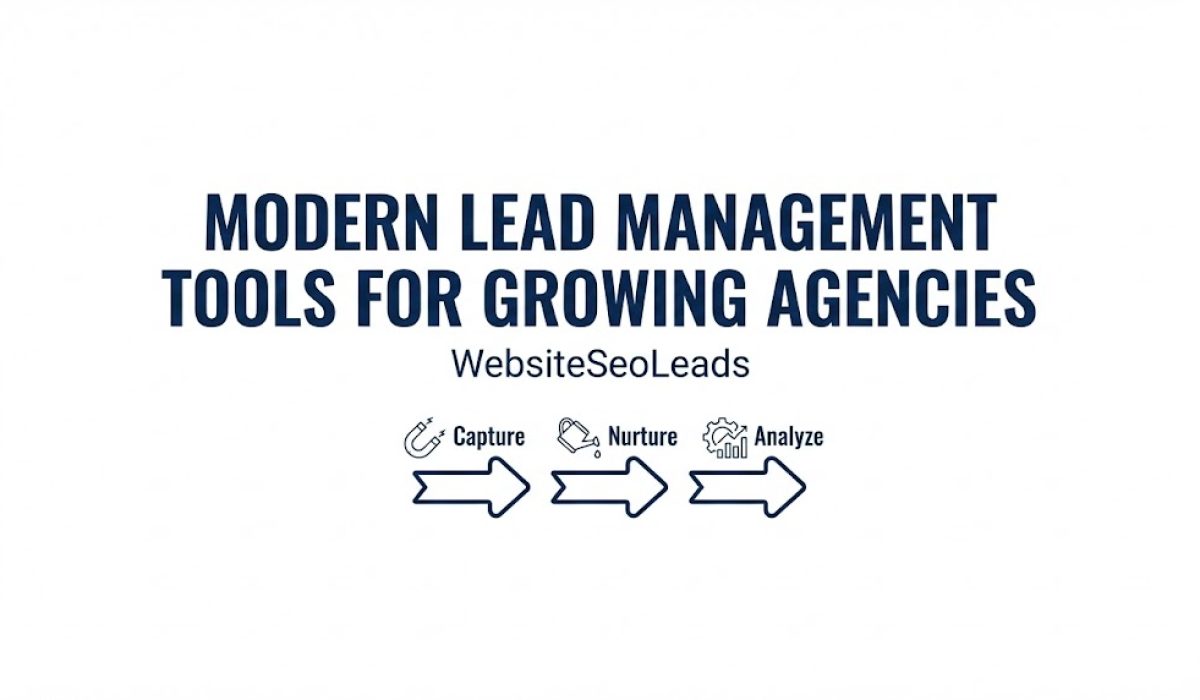
In today’s competitive digital landscape, marketing agencies face a familiar challenge: generating leads is no longer the hardest part—managing, qualifying, and converting them efficiently is. As agencies grow, spreadsheets, manual follow-ups, and disconnected tools begin to break down. This is where modern lead management tools play a critical role in scaling operations without increasing chaos.
Lead management is no longer just about storing contact details. It now involves automation, segmentation, tracking, nurturing, and analytics—all working together to help agencies close more deals with less manual effort. For growing SEO, SMM, web design, and PPC agencies, adopting the right systems can mean the difference between stalled growth and predictable revenue.
Why Traditional Lead Handling Fails at Scale
Many agencies start with basic tools: email inboxes, spreadsheets, or simple CRMs. These work in the early stages, but as lead volume increases, problems quickly emerge.
Leads fall through the cracks when follow-ups are delayed or forgotten. Sales teams lack visibility into where prospects are in the pipeline. Marketing efforts become harder to measure because there is no clear connection between lead source and conversion. Over time, these inefficiencies directly impact revenue.
Growing agencies need systems that can handle volume, speed, and complexity without relying heavily on manual processes. This is why modern lead management tools are no longer optional—they are essential infrastructure.
What Defines a Modern Lead Management Tool
Modern lead management platforms go far beyond basic contact storage. They are designed to automate workflows, improve response times, and provide actionable insights.
At their core, these tools capture leads from multiple sources such as landing pages, ads, forms, and third-party providers. Once captured, leads are automatically organized, tagged, and routed to the right team or pipeline stage. This removes guesswork and reduces human error.
Automation is another defining feature. Follow-up emails, SMS messages, reminders, and task assignments can be triggered based on lead behavior or time intervals. This ensures that every prospect receives timely communication without requiring constant manual intervention.
Lead Qualification and Segmentation at Scale
Not all leads are equal, and modern tools recognize this reality. Advanced lead management systems allow agencies to score and segment leads based on predefined criteria such as budget, location, service interest, or engagement level.
Lead scoring helps sales teams prioritize high-intent prospects instead of wasting time on unqualified inquiries. Segmentation allows agencies to personalize follow-ups and offers, increasing the likelihood of conversion.
For example, a web design inquiry can automatically enter a different workflow than an SEO consultation request. Each receives messaging tailored to their needs, improving relevance and response rates.
Faster Response Times Mean Higher Conversions
Speed matters more than ever in lead conversion. Studies consistently show that responding to a lead within minutes significantly increases the chances of closing the deal. Modern lead management tools make this possible through automation and instant notifications.
When a new lead enters the system, the appropriate team member can be alerted immediately. Automated initial responses can be sent to acknowledge the inquiry and set expectations. This creates a professional first impression and keeps prospects engaged while human follow-up takes place.
Agencies that rely on manual checking and delayed responses often lose deals to competitors who move faster.
Centralized Pipelines and Deal Tracking
As agencies grow, visibility becomes a major challenge. Without a centralized system, it is difficult to know how many leads are active, which stage they are in, and what actions are needed next.
Modern lead management tools solve this by offering visual pipelines that track each prospect from first contact to closed deal. Team members can see the status of every lead, upcoming tasks, and past interactions in one place.
This transparency improves accountability and collaboration across sales and marketing teams. Managers can also forecast revenue more accurately by analyzing pipeline data.
Integration With Marketing and Sales Ecosystems
Another advantage of modern lead management tools is their ability to integrate with other platforms. Email marketing software, ad platforms, calendars, payment systems, and analytics tools can all be connected into a single ecosystem.
This integration eliminates data silos and creates a seamless flow of information. Agencies can track which campaigns generate the highest-quality leads, which follow-up sequences perform best, and where prospects drop off.
By connecting lead management with the rest of the tech stack, agencies gain a clearer understanding of what drives growth and where improvements are needed.
Automation Without Losing Personalization
One concern agencies often have is that automation may feel impersonal. However, modern tools are designed to balance efficiency with customization.
Personalization tokens, dynamic content, and behavior-based triggers allow automated messages to feel relevant and human. Leads can receive communication that reflects their specific needs, industry, or service interest.
This approach allows agencies to maintain a high level of professionalism and personalization even as lead volume increases. Automation becomes a support system, not a replacement for human interaction.
Data-Driven Decisions and Performance Insights
Growing agencies need reliable data to make informed decisions. Modern lead management tools provide detailed analytics on lead sources, response times, conversion rates, and sales performance.
These insights help agencies identify bottlenecks and optimize their processes. For example, if data shows that leads from a specific channel convert better, more budget can be allocated there. If follow-up delays are hurting conversions, workflows can be adjusted.
Data-driven lead management turns guesswork into strategy.
Supporting Agency Growth Without Adding Complexity
One of the biggest advantages of adopting the right lead management tools is scalability. As agencies acquire more clients and expand their services, the system grows with them.
Instead of hiring additional staff to handle administrative tasks, agencies can rely on automation to manage increased demand. This keeps operational costs under control while maintaining service quality.
Platforms like WebsiteSeoLeads demonstrate how combining lead generation with structured management systems can simplify growth for agencies that want predictable results without operational overload.
Choosing the Right Tool for Your Agency
Not all lead management tools are created equal. Growing agencies should look for solutions that are flexible, easy to use, and designed specifically for service-based businesses.
Key considerations include automation capabilities, CRM functionality, integration options, reporting features, and customer support. The right tool should adapt to your workflow rather than forcing you to change how you operate.
Agencies that invest early in the right systems position themselves for long-term success. Those that delay often find themselves stuck managing complexity instead of focusing on strategy and client results.
Final Thoughts
Modern lead management tools are no longer a luxury for large enterprises—they are a necessity for growing agencies that want efficiency, clarity, and consistent revenue. By automating follow-ups, centralizing data, and providing actionable insights, these tools empower agencies to scale without sacrificing quality.
When combined with reliable lead sources and smart processes, solutions like WebsiteSeoLeads can help agencies move from reactive sales efforts to a structured, predictable growth model. In an industry where speed and organization matter, modern lead management is the foundation that supports sustainable success.