For web agencies and freelance development teams, inconsistent project flow is one of the biggest barriers to sustainable growth. One month brings multiple signed contracts, while the next is filled with uncertainty. This cycle is rarely caused by a lack of skill. More often, it results from the absence of a reliable pipeline for web projects.
A predictable pipeline allows agencies to plan resources, forecast revenue, and focus on delivering high-quality work instead of constantly searching for the next client. Building such a system requires strategic planning, structured processes, and the right combination of tools.
Understanding What a Reliable Pipeline Means
A reliable pipeline is not simply a list of potential clients. It is a structured system that continuously attracts, qualifies, nurtures, and converts prospects into active projects. It ensures that opportunities are always moving through different stages, from initial awareness to signed agreements.
For web projects, this pipeline must be tailored to the buying behavior of businesses seeking website design, development, or redesign services. Decision-makers often research extensively, compare multiple providers, and evaluate long-term value before committing.
Identifying the Right Type of Web Clients
The foundation of a strong pipeline begins with clarity around the ideal client. Not every inquiry is worth pursuing. Agencies that chase every lead often struggle with low budgets, unclear requirements, or scope creep.
Reliable pipelines are built by targeting clients who understand the value of professional web services. This includes businesses with growth goals, clear timelines, and realistic budgets. By focusing on quality over quantity, agencies reduce friction and increase project success rates.
Creating Consistent Lead Entry Points
A pipeline fails when lead flow is inconsistent. High-performing agencies establish multiple entry points to ensure prospects are always entering the system.
These entry points may include organic search traffic, paid advertising, referral partnerships, and industry-specific platforms. Each channel should direct prospects to a clear next step, such as a consultation booking or project inquiry form.
Platforms like WebsiteSeoLeads support agencies by connecting web professionals with businesses actively searching for digital services, helping stabilize lead flow during slow periods.
Designing Conversion-Focused Inquiry Processes
Attracting visitors is only half the process. Converting interest into qualified inquiries requires careful design. Inquiry forms should collect enough information to assess fit without overwhelming prospects.
Key questions may include project scope, business goals, budget range, and timeline. This data allows agencies to prioritize serious prospects and respond with tailored proposals.
Clear messaging also plays a critical role. Prospects should immediately understand what services are offered, who they are best suited for, and what outcomes they can expect.
Structuring Pipeline Stages for Web Projects
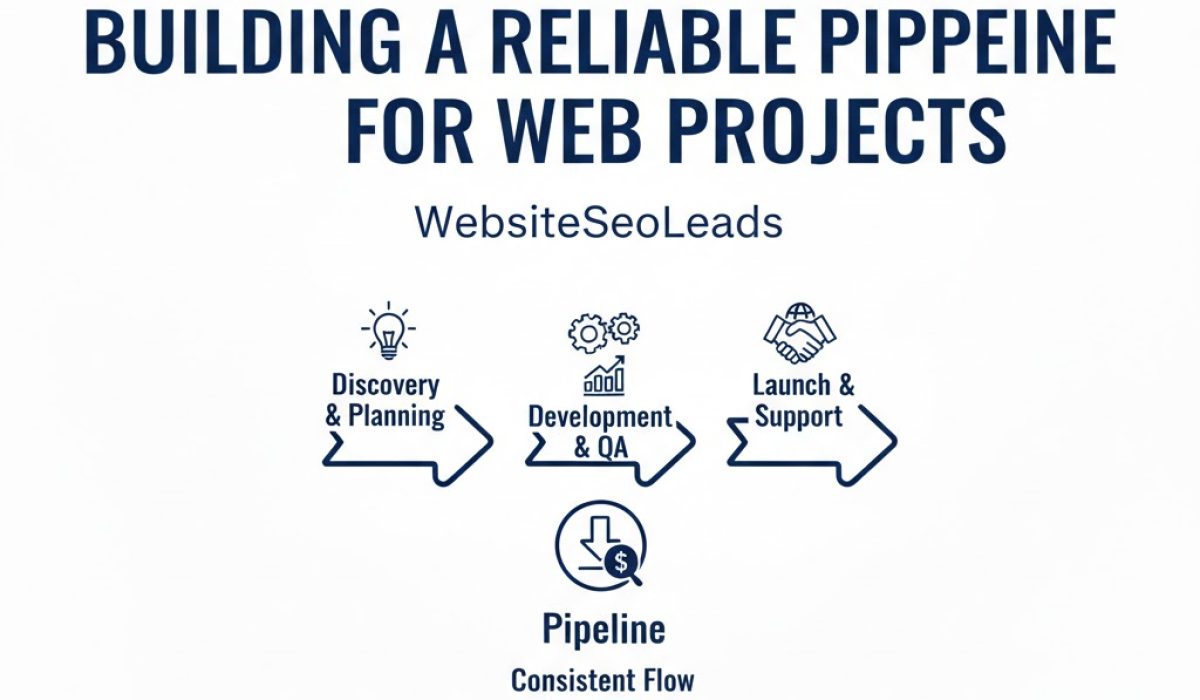
A reliable pipeline is defined by clearly structured stages. Each stage represents a specific step in the client journey and has defined actions and outcomes.
Common stages include initial inquiry, qualification, discovery call, proposal, negotiation, and contract signing. By mapping these stages, agencies gain visibility into where opportunities are progressing or stalling.
Structured pipelines also allow teams to identify bottlenecks. If deals consistently stall at the proposal stage, it may indicate pricing issues or unclear value communication.
Automating Follow-Ups and Communication
One of the most common reasons web projects are lost is delayed or inconsistent follow-up. Prospects often contact multiple agencies, and the fastest, most professional response usually wins.
Automation ensures that every inquiry receives immediate acknowledgment and scheduled follow-ups. Email sequences, calendar reminders, and CRM notifications help maintain momentum without manual effort.
Automation does not replace personal interaction. Instead, it supports it by ensuring no opportunity is forgotten while allowing teams to focus on meaningful conversations.
Leveraging CRM Systems for Visibility and Control
A CRM system serves as the central hub for managing the pipeline. It stores client details, tracks communication history, and provides real-time insights into deal status.
For web agencies, CRM systems enable better forecasting and workload planning. Knowing how many projects are likely to close in the coming weeks helps allocate developers, designers, and project managers efficiently.
Modern CRM solutions also integrate with marketing tools, allowing agencies to connect lead generation with sales execution seamlessly.
Measuring Pipeline Performance
A reliable pipeline must be measurable. Agencies should track metrics such as lead-to-call conversion rates, proposal acceptance rates, and average project value.
These metrics reveal which channels produce the most profitable projects and which stages require improvement. Over time, data-driven adjustments significantly improve pipeline reliability.
Consistent measurement also enables more accurate revenue forecasting, reducing uncertainty and supporting strategic growth decisions.
Building Trust Throughout the Buying Journey
Web projects often represent a significant investment for clients. Trust plays a major role in conversion decisions. Agencies that share case studies, testimonials, and clear processes build confidence early in the relationship.
Transparent pricing frameworks, defined timelines, and documented workflows further reduce hesitation. A reliable pipeline is strengthened when prospects feel informed and supported at every stage.
Scaling the Pipeline Without Sacrificing Quality
As agencies grow, the challenge shifts from generating leads to managing them effectively. Scaling a pipeline requires maintaining quality standards while increasing volume.
This involves refining qualification criteria, improving onboarding processes, and standardizing proposals. Agencies that scale too quickly without structure risk damaging their reputation and client satisfaction.
Solutions like WebsiteSeoLeads contribute to scalable growth by providing access to intent-driven opportunities while allowing agencies to focus on delivery and relationship management.
Long-Term Impact of a Reliable Web Project Pipeline
A stable pipeline transforms how agencies operate. Revenue becomes predictable, teams work with clarity, and growth decisions are made with confidence.
Instead of reacting to market fluctuations, agencies with reliable pipelines operate proactively. They invest in talent, improve service offerings, and build long-term client relationships.
Building a reliable pipeline for web projects is not a one-time effort. It is an ongoing process of optimization, alignment, and refinement. Agencies that commit to this approach position themselves for sustained success in an increasingly competitive digital landscape.