For digital agencies, the difference between steady growth and constant struggle often comes down to one factor: the ability to consistently attract ready-to-buy clients. These are prospects who already understand their problem, recognize the value of professional services, and are actively looking for a solution. Agencies that focus on securing such clients close deals faster, reduce sales friction, and maintain healthier profit margins.
In contrast, agencies that rely on random inquiries, cold outreach, or poorly targeted campaigns spend excessive time educating prospects who may never convert. High-performing agencies shift their strategy toward systems and methods designed to attract buyers with intent, not just attention.
Understanding What “Ready-to-Buy” Really Means
A ready-to-buy client is not just someone who fills out a form or responds to a message. These clients typically show clear signals of intent. They may be searching for specific services, comparing providers, or requesting pricing and timelines.
Such prospects require less convincing because they already recognize the need for help. The agency’s role is to position itself as the most credible and suitable solution. The methods outlined below focus on capturing this level of intent and turning it into consistent revenue.
Positioning Services Around Buyer Intent
Agencies that secure high-quality clients start with precise positioning. Generic service descriptions attract generic leads. Clear, outcome-driven positioning attracts decision-makers.
Instead of marketing broad offerings, successful agencies frame their services around specific problems and results. For example, focusing on lead growth, conversion improvement, or ROI-driven campaigns resonates more strongly with buyers than vague promises.
When prospects see their exact challenge reflected in your messaging, trust builds faster, and conversations move naturally toward purchasing decisions.
Leveraging Intent-Based Lead Sources
Not all traffic sources are equal. Ready-to-buy clients often come from channels where users are actively seeking solutions. These include high-intent search queries, niche platforms, and specialized lead networks.
Agencies that prioritize intent-based lead sources reduce the need for aggressive sales tactics. Prospects arrive with context and urgency, making the sales process more efficient.
Platforms designed to connect agencies with businesses actively seeking marketing or web services play a critical role here. WebsiteSeoLeads, for instance, aligns lead generation with buyer intent, helping agencies focus their efforts on prospects who are already in the decision phase.
Building Conversion-Focused Entry Points
Attracting ready-to-buy clients also depends on how prospects enter your ecosystem. Dedicated landing pages tailored to specific services or industries significantly improve conversion quality.
These pages focus on clarity, credibility, and relevance. They explain what you do, who you serve, and why your solution works. Social proof, case studies, and concise calls to action help reinforce confidence.
When entry points are aligned with buyer intent, agencies avoid attracting unqualified traffic and instead engage prospects who are prepared to move forward.
Eliminating Friction in the Inquiry Process
Ready-to-buy clients expect a smooth experience. Complicated forms, unclear next steps, or delayed responses can quickly push them toward competitors.
High-growth agencies streamline their inquiry process by minimizing unnecessary steps. Clear scheduling options, instant confirmations, and transparent communication help maintain momentum.
Speed is critical. Studies consistently show that faster response times significantly increase conversion rates. Agencies that prioritize responsiveness signal professionalism and reliability.
Using Automation to Capture and Nurture Demand
Automation is a key factor in securing buyers at the right moment. Even high-intent prospects may not convert immediately. Automated follow-ups ensure no opportunity is lost.
Email sequences, reminders, and CRM workflows help agencies stay visible without appearing intrusive. Automation also maintains consistency across all leads, regardless of volume.
With structured automation in place, agencies can scale client acquisition without sacrificing personalization or control.
Qualifying Leads Without Losing Opportunities
Not every inquiry is worth pursuing, but overly aggressive filtering can also result in missed deals. High-performing agencies implement smart qualification frameworks that balance efficiency with opportunity.
This may involve asking targeted questions, using scoring systems, or segmenting leads based on behavior and intent. The goal is to prioritize conversations with prospects most likely to convert while still nurturing others for future opportunities.
Effective qualification protects agency resources while maximizing long-term value.
Demonstrating Authority and Trust Early
Ready-to-buy clients still need reassurance. Authority signals such as testimonials, industry recognition, and detailed case studies help reinforce confidence.
Agencies that clearly demonstrate expertise reduce objections and shorten sales cycles. Transparency around processes, pricing structures, and expectations further strengthens trust.
Trust is often the final factor that turns interest into commitment.
Aligning Sales Conversations With Buyer Expectations
Sales conversations should feel consultative, not transactional. Ready-to-buy clients want clarity, not pressure.
Agencies that listen carefully, ask the right questions, and tailor proposals to client goals stand out. Instead of selling features, they focus on outcomes and alignment.
This approach positions the agency as a partner rather than a vendor, increasing close rates and client satisfaction.
Measuring What Actually Drives Conversions
Securing ready-to-buy clients is not a one-time effort. Agencies that scale successfully track performance metrics across the entire acquisition process.
Key indicators include lead source performance, response time, conversion rates, and deal value. Data-driven insights allow agencies to refine strategies and invest more heavily in what works.
Continuous optimization ensures that acquisition systems improve over time rather than stagnate.
Creating a Predictable Client Acquisition System
The most successful agencies do not rely on luck or sporadic wins. They build repeatable systems that consistently deliver qualified opportunities.
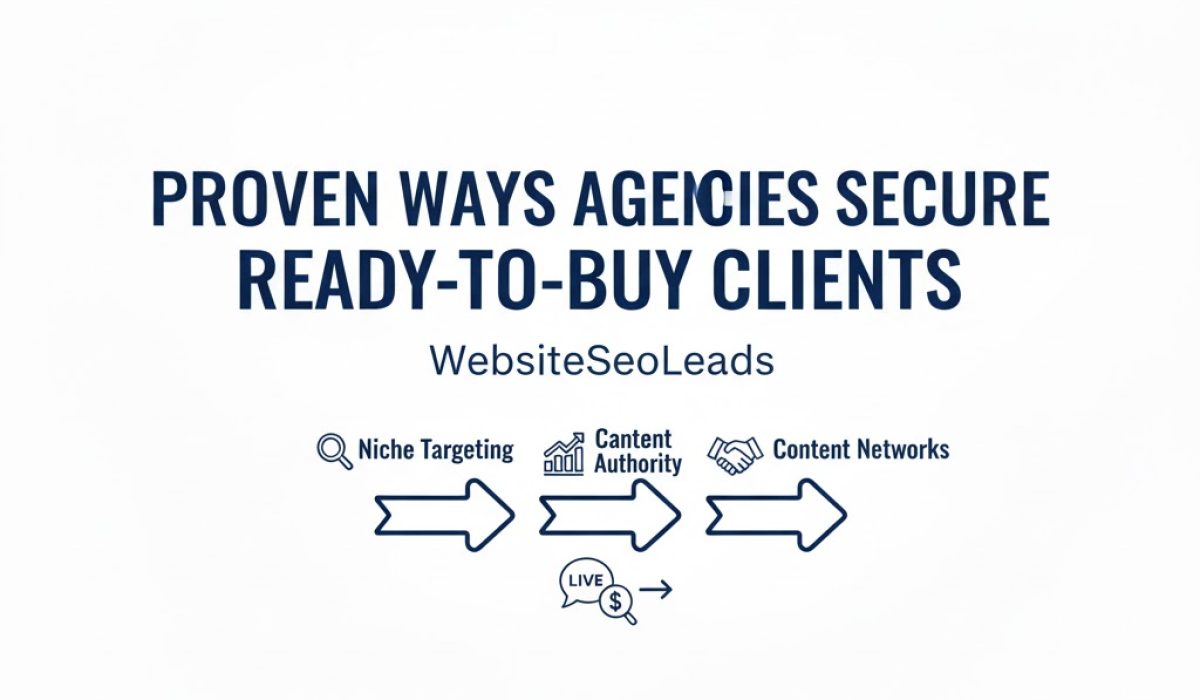
By combining intent-based lead sources, strong positioning, automation, and data analysis, agencies create a predictable flow of ready-to-buy clients.
Solutions like WebsiteSeoLeads support this approach by helping agencies replace fragmented tactics with structured acquisition models designed for scalability.
Long-Term Impact on Agency Growth
When agencies focus on securing ready-to-buy clients, growth becomes more stable and manageable. Sales cycles shorten, revenue becomes more predictable, and teams spend less time chasing unqualified prospects.
This stability enables better planning, improved service delivery, and stronger client relationships. Over time, agencies that master this approach gain a competitive advantage that is difficult to replicate.
Final Thoughts
Proven methods for securing ready-to-buy clients revolve around intent, systems, and execution. Agencies that align their marketing and sales processes with buyer behavior position themselves for sustainable growth.
In an increasingly competitive digital landscape, the ability to attract clients who are already prepared to invest is not just an advantage. It is a necessity for long-term success.