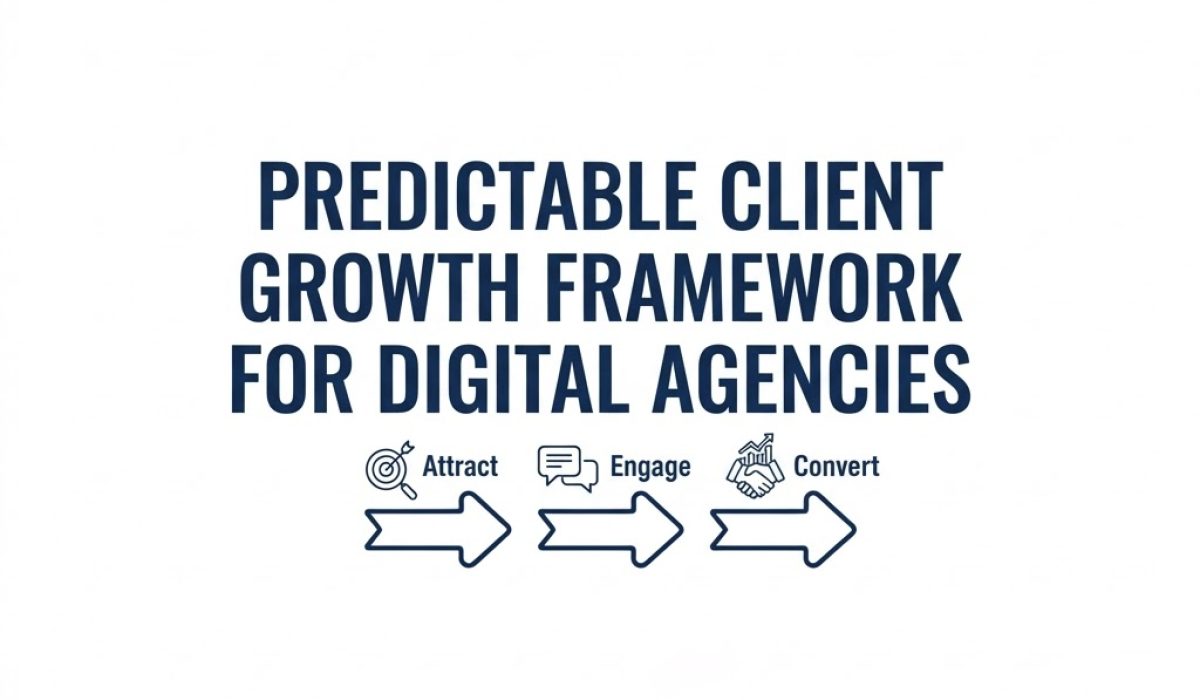
For most digital agencies, growth still feels uncertain. One month is packed with new projects, while the next depends on referrals, follow-ups, or luck. This inconsistency is not caused by a lack of skill or service quality. It usually comes from the absence of a predictable client growth framework.
A predictable framework replaces guesswork with systems. Instead of hoping the next client arrives, agencies design a repeatable process that consistently brings in qualified prospects, nurtures them, and converts them into long-term clients. This article explains how digital agencies can build that framework step by step and scale sustainably.
Why Predictable Growth Matters for Agencies
Unpredictable growth creates multiple challenges. Cash flow becomes unstable, hiring decisions get delayed, and long-term planning feels risky. Founders often end up spending too much time chasing leads instead of improving service delivery or expanding offerings.
Predictable growth solves these problems by ensuring a steady inflow of opportunities. When agencies know how many leads they can generate each month and how many will convert, they gain control over revenue, resources, and strategy.
The Core Elements of a Predictable Client Growth Framework
A reliable framework is not built on one tactic. It is a combination of positioning, lead generation, lead qualification, follow-up systems, and performance tracking. Each element supports the others.
Clear Positioning and Ideal Client Definition
Growth becomes predictable only when agencies know exactly who they want to serve. Broad targeting leads to weak messaging and low-quality inquiries. A defined niche creates clarity.
Agencies should answer:
- What industries do we serve best?
- What problems do we solve better than competitors?
- What budget range fits our services?
This clarity allows marketing efforts to attract clients who are already aligned with the agency’s expertise.
Consistent Lead Acquisition Channels
Relying on one source, such as referrals or social media, makes growth fragile. Predictable frameworks use multiple acquisition channels that can be measured and optimized.
Common channels include:
- Organic search visibility for agency-related keywords
- Paid advertising targeting decision-makers
- Direct outreach supported by automation
- Lead marketplaces and intent-based platforms
Using structured platforms such as WebsiteSeoLeads helps agencies access ready-to-convert prospects instead of starting every conversation from zero. When leads are already searching for services, conversion rates become more consistent.
Lead Qualification Before Sales Calls
Not every lead deserves equal attention. Predictable growth depends on filtering inquiries before they reach the sales team. Qualification criteria might include business size, budget, service need, or timeline.
Simple qualification forms or automated screening questions can prevent time loss and increase close rates. When agencies speak only with serious prospects, forecasting becomes far more accurate.
Automated Follow-Up and Nurturing
One of the biggest reasons agencies lose potential clients is poor follow-up. Prospects often need multiple touchpoints before making a decision. Manual follow-ups are inconsistent and easy to forget.
Automation ensures every lead receives:
- Immediate acknowledgment
- Educational content explaining services
- Timely reminders and check-ins
An automated follow-up system keeps the agency top-of-mind while reducing manual workload. Over time, this creates a predictable conversion pattern instead of random wins.
Structured Sales Process
Agencies with predictable growth follow the same sales steps every time. This may include discovery calls, proposal templates, pricing frameworks, and decision timelines.
A standardized sales process allows agencies to:
- Track where leads drop off
- Improve weak stages
- Train team members faster
When every lead follows the same journey, results become measurable and repeatable.
Turning Leads Into Long-Term Clients
Predictable growth does not stop at closing a deal. Retention and upselling play a major role in stability. Agencies should design onboarding systems that set clear expectations, deliver early wins, and encourage long-term partnerships.
Regular reporting, performance reviews, and proactive strategy suggestions help clients stay engaged. Retained clients reduce pressure on lead generation and increase lifetime value, making growth even more predictable.
Data Tracking and Performance Optimization
A framework without tracking is incomplete. Agencies must measure every stage of the pipeline, from lead source to closed revenue.
Key metrics include:
- Cost per lead
- Lead-to-call conversion rate
- Call-to-client conversion rate
- Average client value
- Client retention duration
With this data, agencies can identify what works and double down on successful channels. Over time, decision-making becomes data-driven instead of emotional.
Scaling the Framework Without Chaos
Once the framework works at a small scale, agencies can expand it. Scaling does not mean adding random tactics. It means increasing volume while maintaining quality.
Examples include:
- Increasing lead flow from proven sources
- Hiring sales or account managers once conversion rates are stable
- Expanding services to existing clients
Because the system is predictable, growth feels controlled instead of overwhelming.
Common Mistakes That Break Predictability
Many agencies attempt to grow but unknowingly sabotage consistency. Common mistakes include:
- Chasing too many niches at once
- Ignoring lead follow-ups
- Depending solely on referrals
- Running ads without clear tracking
- Changing strategies too frequently
Predictability requires patience and discipline. Small improvements compound when systems are allowed to mature.
Building Authority Alongside Lead Generation
Trust plays a major role in conversions. Agencies that combine lead generation with authority-building see better results. Publishing case studies, insights, and educational content helps prospects feel confident before the first call.
When authority supports acquisition, sales cycles shorten and close rates improve, further strengthening predictability.
Final Thoughts
A predictable client growth framework transforms how digital agencies operate. Instead of reacting to market conditions, agencies take control of their pipeline. Clear positioning, consistent lead sources, qualification systems, automation, and tracking create stability and confidence.
Platforms like WebsiteSeoLeads support this framework by supplying intent-driven opportunities that fit seamlessly into structured sales systems. When combined with smart processes, agencies can move from unpredictable wins to sustainable, scalable growth.
Predictable growth is not about shortcuts. It is about building systems that work every month, regardless of season or trends.